
Why Are Custom Orthotics So Expensive to Make?
- Lakeshore Orthotics
- 1 day ago
- 5 min read

A pair of custom orthotics may look simple once they are inside your shoes. That can make the price surprising. If you have asked, “why are custom orthotics so expensive,” the answer is that the product is only one part of the care. The cost also reflects the assessment, biomechanical expertise, measurements, fabrication, fitting, and adjustments needed to make the device work for your body.
Custom orthotics are not generic insoles with a higher price tag. They are medical devices designed to influence how your feet support the rest of your body while you stand, walk, work, or exercise. For someone managing heel pain, arthritis, diabetes, knee discomfort, a past injury, or ongoing lower-back strain, that distinction matters.
Why Are Custom Orthotics So Expensive?
The short answer is personalization. A properly made orthotic starts with understanding how you move, not simply choosing a shoe size. Your provider looks at foot structure, gait, joint motion, areas of pressure, symptoms, footwear, activity level, and relevant health history. These details guide the design.
A retail insole is made for a broad category of feet. It may add cushioning or basic arch support, which can feel helpful for mild fatigue. A custom orthotic is built around the specific needs identified during an assessment. It may be designed to redistribute pressure, support a collapsing arch, accommodate a prominent joint, improve stability, cushion a sensitive area, or limit a movement that is aggravating pain.
That individual design process takes clinical time and skilled labor. It also creates a device that can be adjusted as your symptoms, footwear needs, or activity level change.
The Assessment Is Part of the Treatment
The assessment is one of the most valuable parts of a custom orthotic appointment. Foot pain does not always begin in the foot. A difference in hip strength, ankle mobility, knee alignment, old injury patterns, or walking habits can affect the way force travels through the lower body.
During a biomechanical and gait assessment, the provider may observe you standing and walking, examine joint movement, assess areas of tenderness or pressure, and review how your current shoes are wearing down. This process helps identify whether orthotics are appropriate and what they need to do.
For example, two people may both report heel pain, but one may need more cushioning and pressure relief while the other needs support to manage excessive foot motion. Giving both people the same insert would overlook the cause of the problem. The assessment helps avoid that one-size-fits-all approach.
It also protects against spending money on the wrong solution. Orthotics can be highly useful, but they are not the answer to every type of pain. In some cases, a brace, compression therapy, footwear change, shockwave treatment, massage therapy, osteopathic care, or a broader rehabilitation plan may be more appropriate alongside or instead of an orthotic.
Materials Are Chosen for Function, Not Appearance
Custom orthotics are commonly made from layered materials with different jobs. A firmer shell may provide structure and motion control. Top covers and padding may improve comfort, absorb shock, reduce friction, or protect high-pressure areas. Accommodations can be added for bunions, calluses, diabetic foot concerns, sensitive joints, or leg-length differences.
These materials must hold up under repeated loading. Each step places force through the foot, and that force adds up over thousands of steps per day. A device that feels good for a week but compresses quickly or loses its shape may not provide lasting support.
The right material combination depends on the person and the shoe. An orthotic for a work boot, athletic shoe, dress shoe, or walking shoe may require a different profile and degree of firmness. A thinner device is not automatically better, and a very firm device is not automatically more supportive. The goal is a balance of control, comfort, durability, and fit.
Fabrication Requires Precision
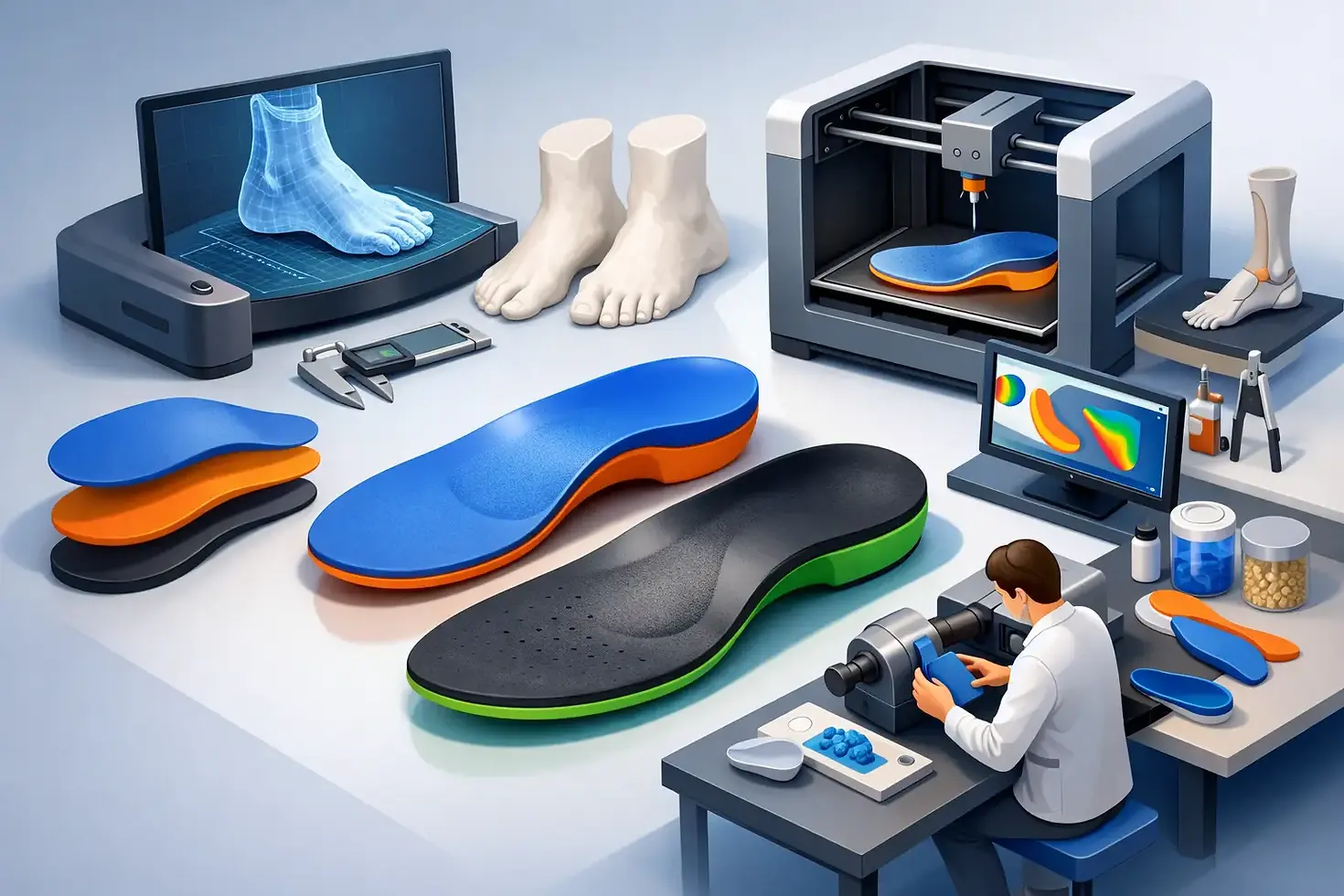
After the assessment, the orthotic design is translated into a physical device. Depending on the fabrication method, this can involve a cast, foam impression, digital scan, or other measurements that capture the foot’s shape and position. The information is then used to create a model and build the orthotic to the prescribed specifications.
Technicians shape the shell, add corrections and accommodations, select top materials, and finish the device for the intended footwear. That work requires specialized equipment and quality control. The device must match the clinical plan while also fitting comfortably inside a shoe.
Small changes can make a meaningful difference. An accommodation placed a few millimeters off target may fail to relieve pressure. An orthotic that is too bulky may not fit the shoes a patient actually wears. A device that is too aggressive can be uncomfortable, while one that is too soft may not provide the needed support.
This is why custom fabrication is more involved than buying an insert off a store shelf. You are paying for a device made to a set of clinical requirements, not a mass-produced item selected from a display.
Fitting and Follow-Up Have Real Value
Even a well-designed orthotic may need an adjustment after it is worn in real life. Your body needs time to adapt to changes in foot support, and your provider needs feedback about comfort, pressure, pain, and footwear fit.
Follow-up care may include checking how the orthotics sit in the shoe, reviewing your break-in schedule, addressing rubbing or pressure points, and making modifications when appropriate. This is especially relevant for people who spend long hours standing, have diabetes or arthritis, are returning to activity after an injury, or have changing mobility needs.
Not every provider includes the same level of assessment, fitting, or follow-up in the initial fee. When comparing prices, ask what is included. A lower initial price may not include a detailed gait assessment, the same fabrication quality, fitting support, or future adjustments.
Insurance Coverage Can Make Pricing Feel Confusing
Many people first notice the cost of custom orthotics when they review their extended health benefits or out-of-pocket expenses. Coverage varies widely by plan. Some plans cover a portion of the cost, while others require a prescription or have annual limits. The fact that coverage is limited does not determine whether the device is medically appropriate or well made.
Before booking, it is reasonable to ask your insurer what documentation is required and whether an orthotic assessment, prescription, or specific provider credentials are needed. It is also reasonable to ask the clinic for a clear explanation of fees, what the orthotics are designed to address, and what follow-up is available.
When the Investment Makes Sense
Custom orthotics are most worthwhile when there is a clear functional reason to use them. That may include recurring foot pain, instability, lower-limb alignment concerns, pressure-related discomfort, pain that interferes with work or walking, or a diagnosed condition that requires better support or accommodation.
They may be less necessary for someone with occasional tired feet who mainly wants softer cushioning. In that situation, a quality over-the-counter insole and supportive footwear may be a practical first step. The key is matching the solution to the problem rather than assuming the most expensive option is always the right one.
A good orthotic should not be sold as a cure-all. It is one tool in a treatment plan. Results may improve when it is paired with appropriate shoes, activity changes, strengthening, stretching, pain management, or complementary care based on your assessment.
At Lakeshore Orthotics & Wellness Centre, the focus is on helping patients understand what is driving their discomfort and whether custom orthotics are likely to improve daily movement. The value is not just in the device you take home. It is in having a personalized plan that supports safer, more comfortable function in the activities that matter to you.
If pain, pressure, or instability is changing how you walk, work, or stay active, an assessment can provide a clearer next step. The right support should feel practical, purposeful, and built around your daily life.


Comments