
What Do Custom Orthotics Do?
- Lakeshore Orthotics
- Jul 4
- 5 min read

If your feet ache by midday, your knees feel off on stairs, or your lower back tightens after standing, it is fair to ask: what do custom orthotics do? In simple terms, they change how force moves through your feet and lower body. That change can reduce strain, improve alignment, and make walking or standing more comfortable.
Custom orthotics are not just padded inserts. They are medical devices made to match your foot structure, gait pattern, and pressure points. For many people, that difference matters because pain in the feet is often tied to mechanics, not just cushioning.
What do custom orthotics do for your body?
A custom orthotic supports the foot in a way that helps control motion and distribute pressure more evenly. Your feet are the foundation for standing, walking, and balance. When they roll too far inward, stay too rigid, or carry pressure unevenly, the stress can travel upward into the ankles, knees, hips, and lower back.
Orthotics help by guiding the foot into a more efficient position during movement. That can improve shock absorption, reduce pressure on irritated tissues, and limit excess motion that contributes to pain. For someone with plantar fasciitis, that may mean less pull on the heel and arch. For someone with flat feet or overpronation, it may mean better support during each step. For someone with arthritis or diabetes, it may mean reducing high-pressure areas that become uncomfortable or risky over time.
The goal is not to force every foot into the same shape. The goal is to support your specific mechanics so daily movement becomes less stressful.
How custom orthotics differ from store-bought insoles
Over-the-counter insoles can help in mild cases, especially if you need extra cushioning or temporary support. They are widely available, less expensive, and useful for some people with occasional fatigue or minor discomfort.
But they are built for a general foot, not your foot. They do not account for leg length differences, abnormal pressure patterns, gait changes after injury, or the way one foot may function differently from the other. If symptoms keep returning, or pain involves more than simple soreness, a generic insert may not address the cause.
Custom orthotics are based on assessment findings. That usually includes a review of symptoms, foot structure, walking pattern, areas of callusing or pressure, and how your pain behaves during activity. The device is then designed to provide the type of support your body actually needs, whether that means control, offloading, cushioning, or a combination of those features.
Conditions custom orthotics may help address
Custom orthotics are commonly used for plantar fasciitis, heel pain, flat feet, high arches, tendon strain, metatarsal pain, bunions, shin splints, and some forms of knee or low back pain linked to poor foot mechanics. They may also help people with diabetic foot concerns, arthritis, or long hours spent standing at work.
That does not mean orthotics are the answer to every kind of pain. If the source is a nerve issue, severe joint damage, or a problem higher up the kinetic chain, orthotics may help only partly or not at all. This is why a proper assessment matters. The right device can be very effective, but only when it is matched to the right problem.
For rehabilitation patients, orthotics can also play a supportive role while the body recovers. After an injury, your gait often changes to avoid pain. That compensation can create new strain elsewhere. Better foot support can help restore a more balanced walking pattern while other treatment continues.
What happens during a custom orthotics assessment?
A proper orthotic assessment should go beyond looking at the bottom of your feet. It typically includes a health history, a discussion of symptoms, footwear review, and an exam of your foot posture, joint motion, and areas of tenderness. A gait and biomechanical analysis helps identify how your feet function when you are actually moving.
This matters because pain is not always caused by what the foot looks like at rest. Some problems only show up during walking, standing, or weight transfer. Pressure distribution, arch collapse, instability, and limb loading patterns all give useful information when deciding whether orthotics are appropriate.
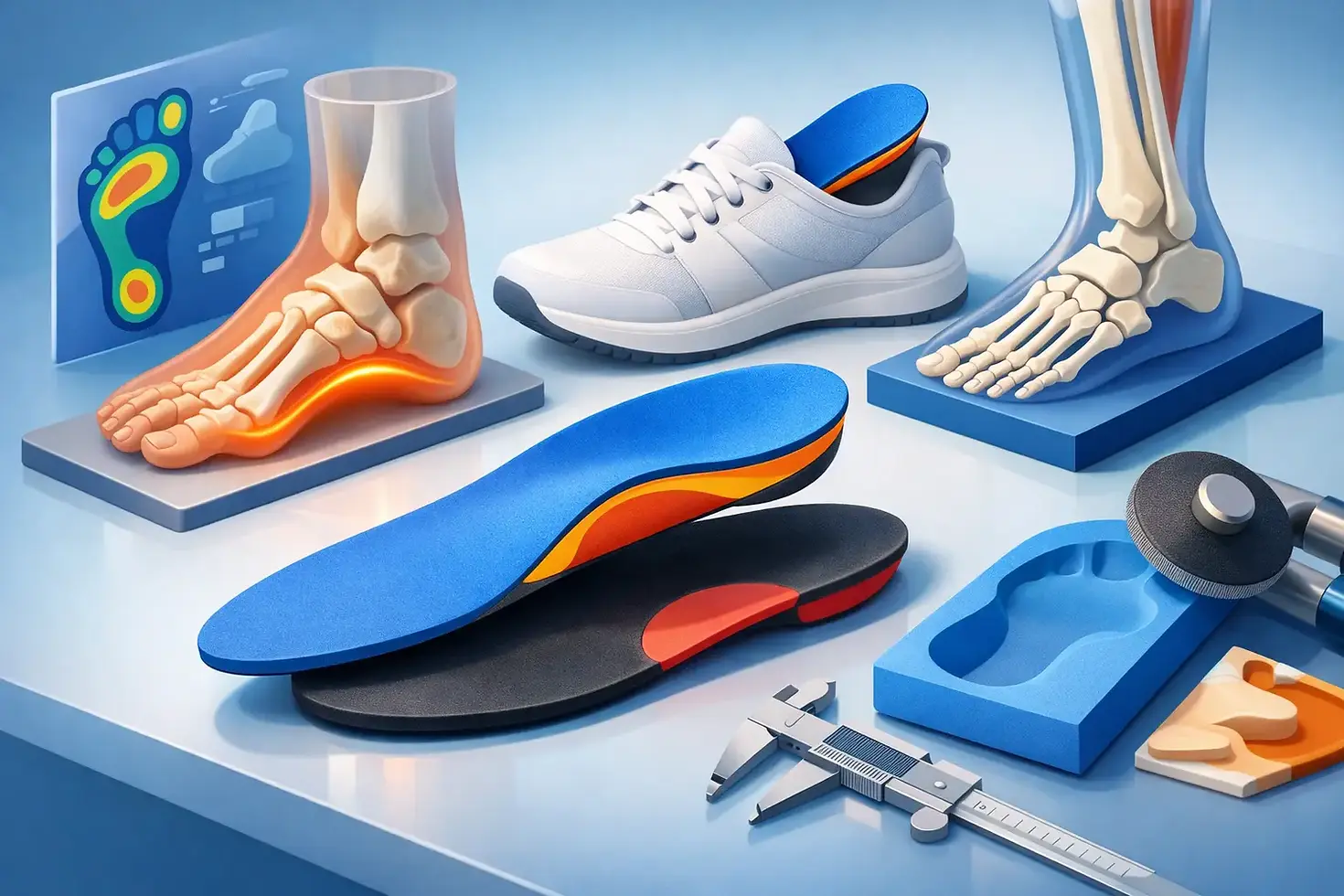
A cast, scan, or foam impression may then be taken to capture your foot shape. That information is used to fabricate the orthotic. Materials and design features vary based on your activity level, weight, footwear, and diagnosis. A rigid device for motion control feels different from a softer design meant to reduce pressure in sensitive areas.
What custom orthotics do not do
Orthotics are helpful, but they are not magic. They do not permanently reshape the foot, cure every source of pain, or replace medical care when a more serious condition is present. They also do not make poor footwear irrelevant. If shoes are too worn, too narrow, or unstable, even a well-made orthotic may not perform as intended.
They also work best when combined with the right plan. Some patients need stretching, strengthening, bracing, or manual therapy alongside orthotics. Others may need changes in work shoes, activity level, or recovery routine. In a multidisciplinary setting, orthotics are often one part of a broader treatment approach rather than the only intervention.
That is especially true for chronic pain or long-standing gait issues. Reducing foot strain can make a major difference, but long-term improvement may also depend on how the rest of the body is functioning.
How long does it take to feel a difference?
Some people feel relief quickly, especially when the main issue is pressure or alignment during standing and walking. Others need a break-in period while the body adjusts to a different movement pattern. Mild soreness at first is not unusual, but sharp pain or worsening symptoms should be reassessed.
The timeline also depends on the condition being treated. A person with simple arch fatigue may feel better in days. Someone with chronic plantar fasciitis, arthritis, or compensation patterns built over years may need more time and follow-up.
This is another reason custom fitting matters. If the orthotic is not comfortable in the shoe, if the correction is too aggressive, or if your symptoms change, adjustments may be needed. Good orthotic care does not end at the time of delivery.
Who is most likely to benefit?
Adults who spend long hours on their feet, people with recurring heel or arch pain, older adults dealing with joint stress, and patients recovering from lower limb injury often benefit from custom orthotics. They can also be useful for people with diabetes who need pressure reduction and foot protection, or for those with arthritis who need more support for everyday walking.
Working professionals often wait too long because they assume foot pain is normal. It is not. If your discomfort keeps coming back, changes the way you walk, or affects your knees, hips, or back, it is worth having it assessed.
In clinics like Lakeshore Orthotics & Wellness Centre, orthotics are often part of a practical care plan aimed at reducing pain and improving function without surgery. That approach makes sense when the issue is mechanical and the goal is to stay active, mobile, and comfortable in daily life.
When to consider booking an assessment
If you have foot pain that lasts more than a few weeks, recurring calluses, uneven shoe wear, balance issues, or lower body pain that worsens with standing or walking, an assessment is reasonable. The same applies if a store-bought insert helped only a little or stopped helping altogether.
You do not need to wait until pain becomes severe. The earlier abnormal mechanics are identified, the easier it may be to reduce ongoing strain. For some people, orthotics prevent a manageable issue from becoming a long-term one.
Custom orthotics are not about adding extra padding for the sake of comfort. They are about changing how your body handles load, one step at a time. When the fit is right and the assessment is thorough, that small device can make everyday movement feel more stable, less painful, and a lot more sustainable.


Comments