
Post Surgery Swelling Guide: What Helps?

Swelling can make recovery feel more difficult than expected. A foot, ankle, knee, hip, hand, or surgical incision may look noticeably larger, feel tight, and limit comfortable movement even when the procedure itself went well. This post surgery swelling guide explains why swelling happens, what practical measures may help, and which changes need prompt medical attention.
Your surgeon’s discharge instructions always come first. Recovery timelines, weight-bearing limits, wound care, medications, and compression recommendations vary by procedure and by individual health history.
Why swelling happens after surgery
Surgery causes controlled trauma to the body. Nearby blood vessels and tissues respond with inflammation, sending fluid and healing cells to the area. This response is part of normal healing, but the extra fluid can create pressure, stiffness, aching, and reduced range of motion.
Swelling is often greatest in the first few days after surgery. It may improve gradually, then temporarily increase after more activity, prolonged standing, travel, or physical therapy. Lower-limb procedures can be especially prone to swelling because gravity makes it harder for fluid to return from the feet and ankles to the heart.
The length of swelling depends on the procedure. Minor soft-tissue surgery may settle within days or weeks, while joint replacement, fracture repair, tendon repair, and foot or ankle surgery can involve swelling for several months. Improvement is usually gradual rather than linear.
What normal recovery swelling may feel like
Normal swelling is usually located around the surgical area or, after leg surgery, farther down the limb. For example, ankle swelling can occur after knee or hip surgery. The skin may feel stretched, shoes or socks may fit more tightly, and the area may be stiff after sitting or first thing in the morning.
A mild increase in swelling after a prescribed exercise session or a more active day can be expected. It should improve with rest and the recovery measures approved by your surgical team. Pain should remain manageable with the plan you were given, rather than becoming suddenly severe or different in character.
Bruising may also accompany swelling, especially after orthopedic surgery. Bruises can travel down the arm or leg as they resolve, which can look alarming but is often related to gravity. Still, new or worsening symptoms deserve a call to the surgeon’s office.
Safe ways to manage post-surgery swelling
Follow activity and weight-bearing restrictions
The right amount of movement supports circulation and helps prevent stiffness, but doing too much too soon can increase swelling and delay recovery. Use crutches, a walker, brace, boot, or other mobility aid exactly as directed. If you were told not to bear weight, do not test the limb because it feels better that day.
Short, frequent movement breaks may be more helpful than long periods of standing or walking. If your care plan includes ankle pumps, gentle range-of-motion exercises, or walking intervals, complete them at the frequency recommended by your provider. Avoid adding exercises from online videos without clearance.
Elevate correctly
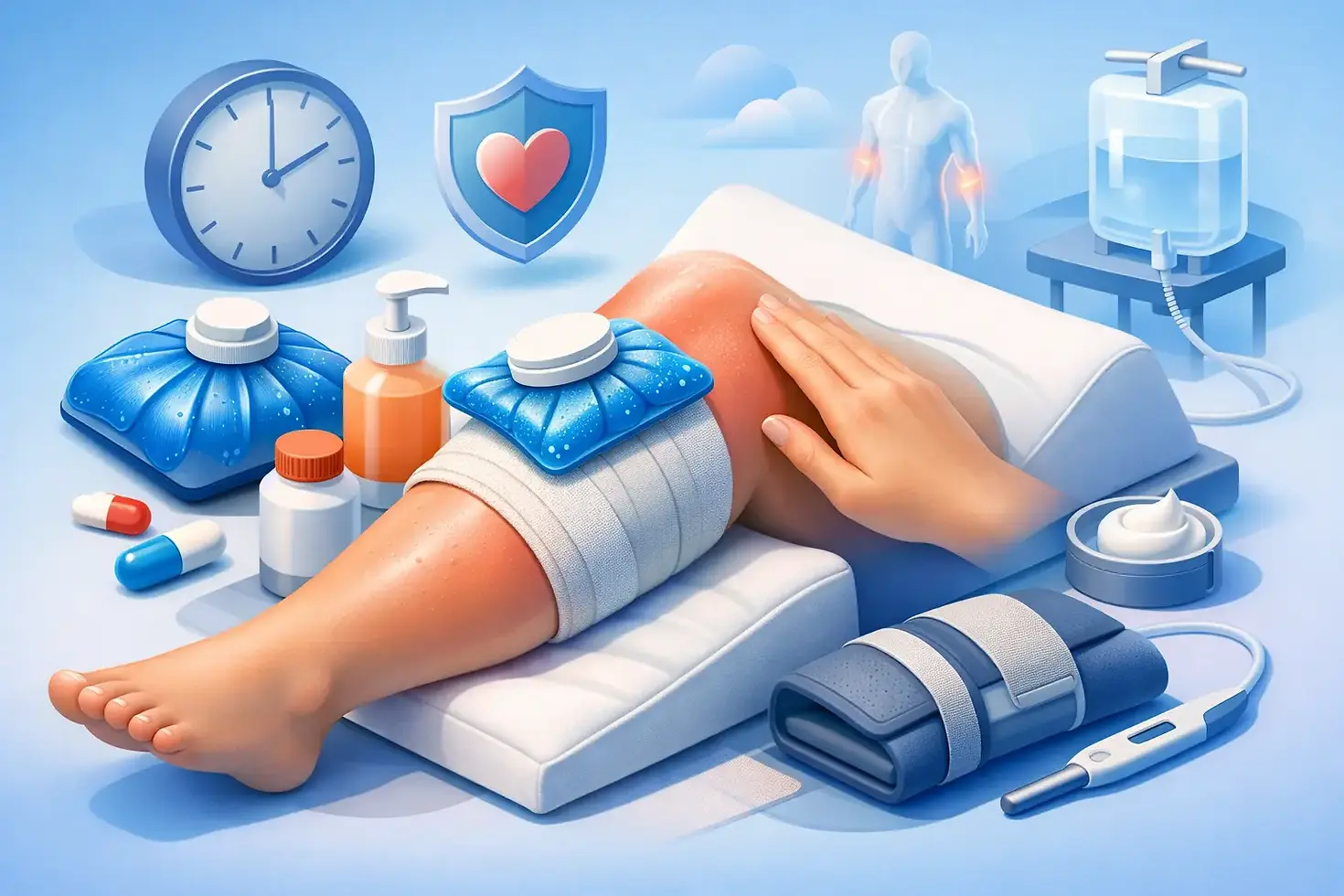
Elevation can reduce fluid pooling, particularly after foot, ankle, knee, or hip surgery. When resting, raise the affected limb as instructed by your surgical team. In many cases, positioning the limb above heart level is recommended, but the appropriate position depends on the surgery and any precautions you have.
Use stable pillows that support the full limb rather than creating pressure directly behind the knee or on a fresh incision. Do not sleep in an unsafe position or use elevation that causes numbness, pain, or strain in your back and hips.
Use cold therapy only as directed
Cold packs may reduce discomfort and swelling in the early stages of recovery. Protect the skin with a cloth barrier, use the time limits provided by your surgeon, and avoid falling asleep with an ice pack in place. People with reduced sensation, circulation concerns, diabetes-related nerve changes, or certain skin conditions need individualized guidance before using cold therapy.
Some procedures have specific rules about cold therapy near dressings, drains, grafts, or incisions. If you are unsure, ask before applying ice.
Consider compression with professional guidance
Compression stockings, wraps, or surgical compression garments may be part of a post-operative plan, but they are not appropriate for every person or procedure. The correct pressure, length, fit, and wearing schedule matter. A garment that rolls, pinches, causes toe discoloration, or leaves deep painful marks should be assessed rather than forced into use.
Compression can be particularly useful when it has been prescribed for circulation support or lower-limb recovery. However, it should not be used as a substitute for medical assessment when swelling is sudden, one-sided, painful, or accompanied by shortness of breath. Anyone with known arterial disease, significant neuropathy, skin breakdown, or a history of blood clots should confirm suitability with their physician.
A professional fitting can help ensure that stockings support circulation without creating unnecessary pressure. At Lakeshore Orthotics & Wellness Centre, compression fittings and mobility supports can be coordinated around your existing medical instructions.
Support hydration, nutrition, and rest
Dehydration, high-sodium foods, alcohol, and poor sleep can all make fluid retention and recovery more difficult. Drink fluids according to your provider’s advice, especially if you have heart, kidney, or fluid restrictions. Choose regular meals with protein and nutrient-dense foods to support tissue repair.
Rest is treatment, not inactivity. Your body needs energy to heal, but extended immobility can increase stiffness and circulation concerns. Aim for the balance outlined in your recovery plan.
When swelling needs urgent medical attention
Do not assume every increase in swelling is normal. Contact your surgeon promptly if swelling is rapidly worsening, is not responding to rest as it previously did, or appears with increasing redness, warmth, drainage, fever, or worsening incision pain. These changes can signal infection or another complication that needs assessment.
Seek urgent medical care or call emergency services for chest pain, shortness of breath, coughing blood, fainting, or a racing heartbeat. These symptoms can be associated with serious conditions, including a blood clot in the lung.
Call your medical provider urgently for new calf pain, marked tenderness, sudden one-sided leg swelling, skin that becomes pale or blue, or numbness and weakness that are new or worsening. Do not massage a painful, swollen calf or try to manage suspected clot symptoms with compression or exercise at home.
When additional recovery support may help
Once your surgeon has cleared you, supportive services can make the transition back to daily movement more manageable. A properly fitted walker, cane, brace, or orthopedic support can reduce strain while you rebuild confidence with walking. For patients whose shoes no longer fit comfortably because of lingering foot swelling, temporary footwear choices and supportive fitting advice may also help prevent secondary pain.
Therapies such as manual lymphatic drainage may be considered in selected cases, but only after surgical clearance and a screening for concerns such as infection, active blood clot risk, unstable heart conditions, or wound complications. The goal is not to rush healing. It is to support safe fluid movement, comfort, and function at the right stage of recovery.
Persistent swelling can also change the way you walk. If you are compensating by limping, turning your foot outward, or avoiding one side, you may develop pain in the opposite knee, hip, back, or foot. A gait or biomechanical assessment can be useful after you are cleared for more normal activity, especially if discomfort continues beyond the expected recovery period.
Keep your recovery team informed
Take a simple daily note of swelling, pain level, activity, medication changes, and incision appearance during the early recovery period. A photo taken in consistent lighting can also help you notice whether an area is improving or changing. Bring this information to follow-up appointments or share it with your surgeon’s office if you have concerns.
Recovery is rarely perfectly predictable. The right next step may be rest and elevation, an adjustment to activity, a compression fitting, or a call to your surgical team. Paying attention to changes and acting early gives your body the best chance to heal comfortably and safely.


Comments