
Plantar Fasciitis Orthotics Case Study Results

A plantar fasciitis orthotics case study is most useful when it shows more than a pair of inserts. Heel pain often develops from a combination of tissue overload, footwear, work demands, walking mechanics, and recovery habits. The right orthotic plan starts by identifying what is placing repeated strain on the plantar fascia, then providing support that fits the person wearing it.
The following representative case illustrates how an assessment-led approach can help someone return to more comfortable daily movement. It is not a promise of identical results. Every patient’s pain history, foot structure, activity level, and health needs are different.
Plantar Fasciitis Orthotics Case Study: The Patient Profile
A 48-year-old office administrator presented with pain on the bottom of her right heel that had been building for approximately five months. Her first few steps in the morning were especially painful. After sitting through a meeting or driving home from work, standing again caused a sharp pulling sensation near the inside of the heel.
She spent most of her workday alternating between sitting, walking through an office building, and standing at a counter. Outside work, she walked her dog daily and had recently increased her weekend walks in an effort to become more active. She had also begun wearing flatter, less supportive shoes because they were easy to slip on and matched her work clothes.
Before seeking an assessment, she tried stretching occasionally, using a massage ball under her foot, and purchasing an over-the-counter insole. The insole felt better than her shoes alone, but it did not remain comfortable through a full workday. Her goal was practical: walk, work, and get out of bed in the morning without planning around heel pain.
What the Orthotic Assessment Found
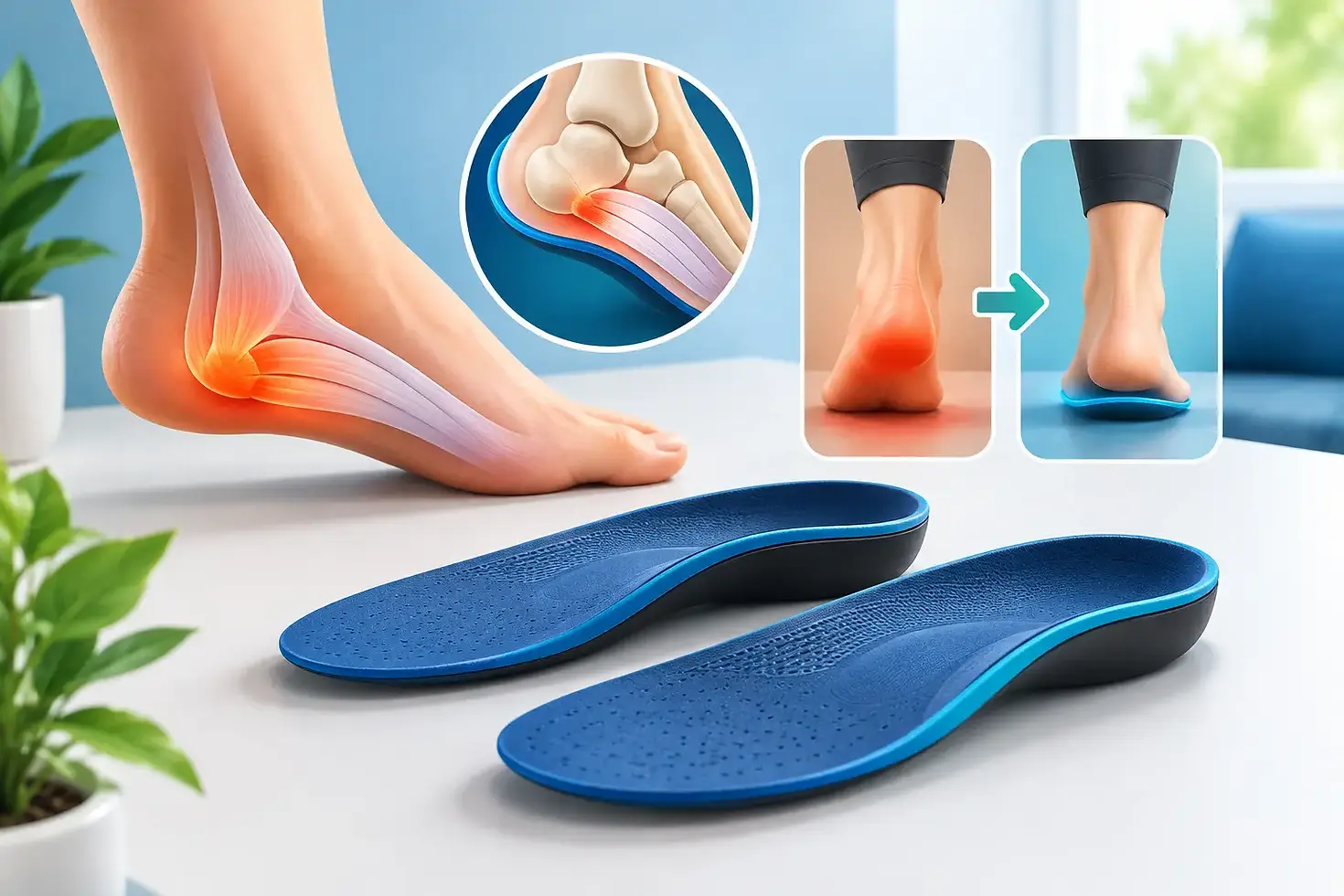
Plantar fasciitis is often associated with pain where the plantar fascia attaches near the heel. The plantar fascia is a strong band of connective tissue that helps support the arch and contributes to foot function during walking. When it is repeatedly overloaded, the tissue can become painful and sensitive.
The assessment looked beyond the location of pain. It included a discussion of symptoms and daily activity, observation of standing posture, walking analysis, footwear review, and examination of foot and lower-limb mechanics. This matters because heel pain is not always caused by plantar fasciitis. A clinical assessment helps determine whether orthotics are appropriate and whether further medical evaluation is needed.
In this case, several findings were relevant. The patient had a low-to-moderate arch that dropped noticeably during weight bearing, along with increased inward rolling of the foot during walking. Her calf muscles and Achilles tendon were also tight, which limited ankle movement. As her heel lifted during gait, the restricted ankle motion and collapsing arch increased tension through the plantar fascia.
Her shoes added to the problem. They were worn down at the heel, flexible through the midsole, and offered little structure around the rearfoot. None of these details alone explains every case of heel pain. Together, however, they gave the clinician a clear reason to focus on support, load management, and mobility.
The Custom Orthotic Plan
The patient was fitted for custom-made foot orthotics designed around her foot shape, gait findings, footwear needs, and comfort tolerance. The goal was not to force the foot into a rigid position. It was to improve support under the arch, help control excessive motion during walking, and distribute pressure more effectively through the foot.
The orthotic design included contoured arch support, heel stabilization, and cushioning in the heel area. Material selection was important because the patient needed an orthotic she could wear at work for long periods. A device that is overly firm may be appropriate for some people, but it can feel intrusive or aggravating for another patient. Comfort affects whether an orthotic is worn consistently enough to help.
She was advised to use the orthotics in supportive walking shoes and work shoes that had enough depth and a stable heel counter. Custom orthotics can improve shoe function, but they cannot fully compensate for footwear that is excessively worn, narrow, or unstable.
The treatment plan also included a gradual break-in schedule. Wearing new orthotics all day immediately can cause discomfort, even when the fit is correct. She began with short periods at home and increased wear time over the following days as tolerated. Mild awareness of new support can be normal. Increasing pain, numbness, pressure points, or rubbing should be reviewed promptly rather than ignored.
Progress Over the Follow-Up Period
At the first follow-up, the patient reported that she was able to wear the orthotics for most of her workday. Morning heel pain was still present, but the intensity had decreased. She was also experiencing less pain after getting up from her desk and after her evening dog walk.
The clinician checked the orthotics in her shoes, reviewed her walking pattern, and made a minor adjustment to improve comfort. Follow-up is a meaningful part of orthotic care. A custom device is made for the individual, but real-life use reveals whether the fit, material, and support level are working as intended in the shoes a patient wears every day.
Alongside orthotic use, the patient followed a simple home routine focused on calf and plantar fascia stretching. She was encouraged to increase walking volume gradually rather than adding long weekend walks while symptoms were still active. This did not mean avoiding all activity. It meant allowing the irritated tissue to adapt instead of repeatedly exceeding its current tolerance.
Over the next several weeks, she reported less frequent heel pain and greater confidence walking at work. Her first steps in the morning were no longer the most difficult part of the day. She still noticed symptoms after unusually long periods on her feet, which helped guide further activity adjustments. Her outcome reflected a plan that addressed both support and the day-to-day factors contributing to overload.
What This Plantar Fasciitis Orthotics Case Study Shows
Custom orthotics are not a stand-alone cure for every case of plantar fasciitis. They are one part of a care plan that may include appropriate footwear, activity changes, stretching, manual therapy, or other non-surgical treatments based on the patient’s presentation.
They may be particularly helpful when foot mechanics are contributing to repeated strain, when store-bought insoles have not provided enough support, or when a person spends long periods standing or walking. Patients with arthritis, diabetes, prior injuries, or circulation concerns may also benefit from an individualized assessment because their footwear and support needs can be more complex.
At the same time, not every heel problem should be managed with orthotics alone. Sudden severe pain, significant swelling, numbness, inability to bear weight, pain after a major injury, or symptoms that do not improve should be assessed by an appropriate health professional. The same is true when heel pain may be related to a nerve condition, stress injury, inflammatory condition, or another diagnosis.
When a Broader Treatment Plan Makes Sense
If plantar fasciitis symptoms are persistent, the most effective next step is often to review the complete picture rather than simply buying a more cushioned insole. An orthotic assessment can identify how the feet, ankles, knees, footwear, work routine, and activity level interact.
For some patients, custom orthotics are paired with shockwave therapy, massage therapy, osteopathic care, or guided mobility work as part of a broader conservative plan. The right combination depends on the source of symptoms, the stage of recovery, and the person’s health history. Care should be specific to the patient, not based on a one-size-fits-all protocol.
For people in Burlington, Hamilton, Oakville, or Mississauga who are limiting walks, work, or exercise because of heel pain, an orthotic assessment offers a practical place to start. The goal is not simply to make shoes feel softer. It is to create a support plan that makes daily movement more manageable and helps you move forward with greater comfort.


Comments