
Gait Analysis Versus Foot Scanning for Foot Pain

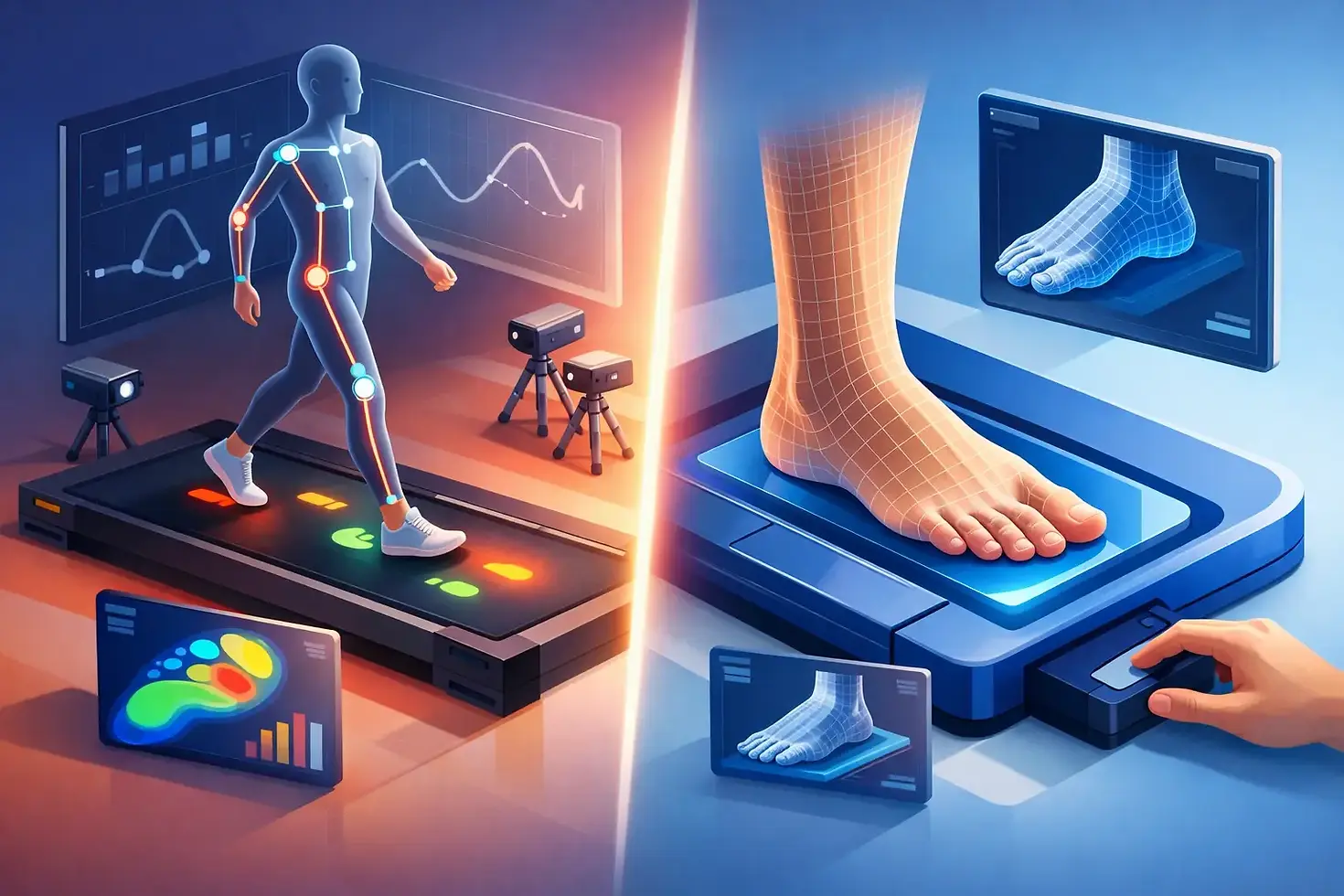
A pressure image can show where your feet carry load. A walking assessment can show why that load is happening. When comparing gait analysis versus foot scanning, the most useful question is not which test is better in every case. It is which information is needed to understand your pain, movement, and support needs.
For people dealing with heel pain, aching arches, knee discomfort, recurring shin pain, balance concerns, or fatigue after standing, a proper orthotic assessment often benefits from both. Each method looks at the feet differently, and each can contribute to a more personalized orthotic recommendation.
What Foot Scanning Measures
Foot scanning creates a detailed image or digital map of the foot. Depending on the equipment used, it may assess foot shape, arch profile, pressure distribution, areas of high load, and the way the foot contacts a surface while standing. This gives the clinician a useful starting point for understanding how your feet are supporting your body.
A scan can help identify patterns such as increased pressure through the heel, forefoot, or inside edge of the foot. It may also show differences between the right and left foot, which can matter when one side is more painful, injured, or affected by arthritis. For someone who spends long hours on concrete floors or has discomfort in work shoes, this information can help guide cushioning and support choices.
Foot scanning is especially helpful when the fit and shape of the orthotic matter. Custom orthotics need to work with the contours of the foot and the footwear being worn. A detailed scan supports accurate orthotic fabrication and can be useful for monitoring changes in foot structure over time.
However, a scan is only one part of the picture. Standing still does not always reveal what occurs when you walk, climb stairs, turn, or shift weight during a long workday. A person may have a foot shape that appears fairly typical on a scan but still develop pain because of the way the ankle, knee, hip, or trunk moves during gait.
What Gait Analysis Reveals
Gait analysis evaluates walking and functional movement. During an assessment, a clinician observes how the feet, ankles, knees, hips, and lower back work together as you walk. They may look at stride length, foot position, balance, timing, joint motion, weight transfer, and visible compensation patterns.
This assessment is valuable because the foot does not move in isolation. If an ankle has limited mobility after an old sprain, the foot may roll inward more than expected to compensate. If hip strength or stability is reduced, the knee may move inward during each step, changing the load placed on the foot. Pain under the forefoot can sometimes be connected to how quickly weight moves forward during walking, not simply to the shape of the arch.
Gait analysis can also help when symptoms occur only during activity. A runner may feel fine while standing but experience calf tightness, knee pain, or foot numbness after several minutes of movement. An office worker may have no pain in supportive shoes but develop symptoms after walking across a parking lot in less supportive footwear. Watching movement can make these patterns easier to identify.
For older adults or people recovering from injury, gait analysis can provide practical information about stability and confidence while walking. It may reveal short steps, guarded weight-bearing, reduced push-off, or uneven loading that is contributing to discomfort or increasing fall risk. Orthotic support, bracing, footwear changes, mobility aids, or complementary treatment may be recommended depending on the findings.
Gait Analysis Versus Foot Scanning: The Key Difference
The key difference is simple: foot scanning primarily shows the structure and pressure characteristics of the foot, while gait analysis shows how the body uses the foot during movement.
Neither method should be treated as a stand-alone diagnosis. A high-pressure area on a foot scan does not automatically explain the source of pain. Likewise, an observed walking pattern does not replace an examination of foot shape, footwear, medical history, and symptoms. The strongest assessment combines clinical judgment with the tools that are relevant to the person in front of the clinician.
For example, a person with plantar heel pain may have increased heel pressure on a scan, but gait analysis may also reveal limited ankle motion and a shortened stride. In that case, an orthotic may need heel cushioning and arch support, but the care plan could also include stretching, manual therapy, shockwave treatment when appropriate, or footwear guidance. Addressing only the pressure point may not provide the full result.
Someone with diabetes may benefit from foot scanning to identify areas that require pressure management and protective support. If they also feel unsteady or have changes in sensation, gait observation adds another layer of useful information. The goal is to reduce unnecessary strain while helping the person move with greater confidence.
When You May Need Both Assessments
Many orthotic appointments include elements of both static and dynamic assessment because pain and function are rarely explained by one measurement. A combined approach is particularly useful when symptoms are recurring, affect more than one joint, or have not improved with over-the-counter insoles.
Consider a full assessment if you have:
Foot, heel, arch, ankle, knee, hip, or lower back pain that worsens with walking or standing
A history of sprains, fractures, surgery, workplace strain, or motor vehicle accident injuries
Arthritis, diabetes, circulation concerns, or noticeable changes in balance
Uneven shoe wear, frequent calluses, recurring blisters, or one foot that feels different from the other
Pain that returns after temporary relief from store-bought inserts or supportive shoes
These concerns do not always mean custom orthotics are the answer. Some people need changes to footwear, activity modification, a brace, compression support, mobility equipment, or hands-on treatment. Others may need a referral for further medical investigation. An assessment helps separate situations where an orthotic is likely to help from those where another option should come first.
How Assessment Findings Guide Orthotic Design
A custom orthotic is not simply an insole with an arch added to it. Its design should reflect the person’s foot shape, pressure areas, walking mechanics, diagnosis, shoes, and daily demands. A warehouse worker, a recreational walker, and a person wearing dress shoes will not necessarily need the same materials or level of control.
Foot scanning may help determine where cushioning, accommodation, or contact support is needed. Gait findings may influence how the orthotic manages motion, supports alignment, or redistributes force during each step. Small design choices can affect comfort, shoe fit, and whether the device is worn consistently.
Follow-up matters as well. Even a well-made orthotic may need adjustment once it is used in real life. Your clinician should consider whether symptoms are changing, whether the orthotic fits the intended footwear, and whether the support is comfortable enough for daily use. Pain relief is important, but improved walking tolerance, stability, and function are often the more meaningful measures of progress.
What to Expect at an Orthotic Assessment
A thorough appointment usually begins with a discussion of your symptoms, health history, work demands, activity level, and footwear. You may be asked when pain occurs, what makes it better or worse, and whether you have had previous injuries or treatments.
The physical assessment may include checking joint motion, muscle strength, tenderness, foot posture, and leg alignment. Your clinician may then use foot scanning, gait analysis, or both based on the reason for your visit. Bring the shoes you wear most often, especially if your symptoms occur at work, during exercise, or in a specific style of footwear.
At Lakeshore Orthotics & Wellness Centre, the purpose of assessment-driven care is to match the recommendation to your actual needs, rather than relying on a one-size-fits-all insert. If orthotics are appropriate, the discussion should include what they are designed to address and what results are realistic for your condition.
The right assessment is the one that gives a clearer explanation for your symptoms and a practical next step. If foot pain or walking discomfort is limiting your day, book an orthotic assessment and bring the details of how your body feels in motion.


Comments